
Verruca Treatment
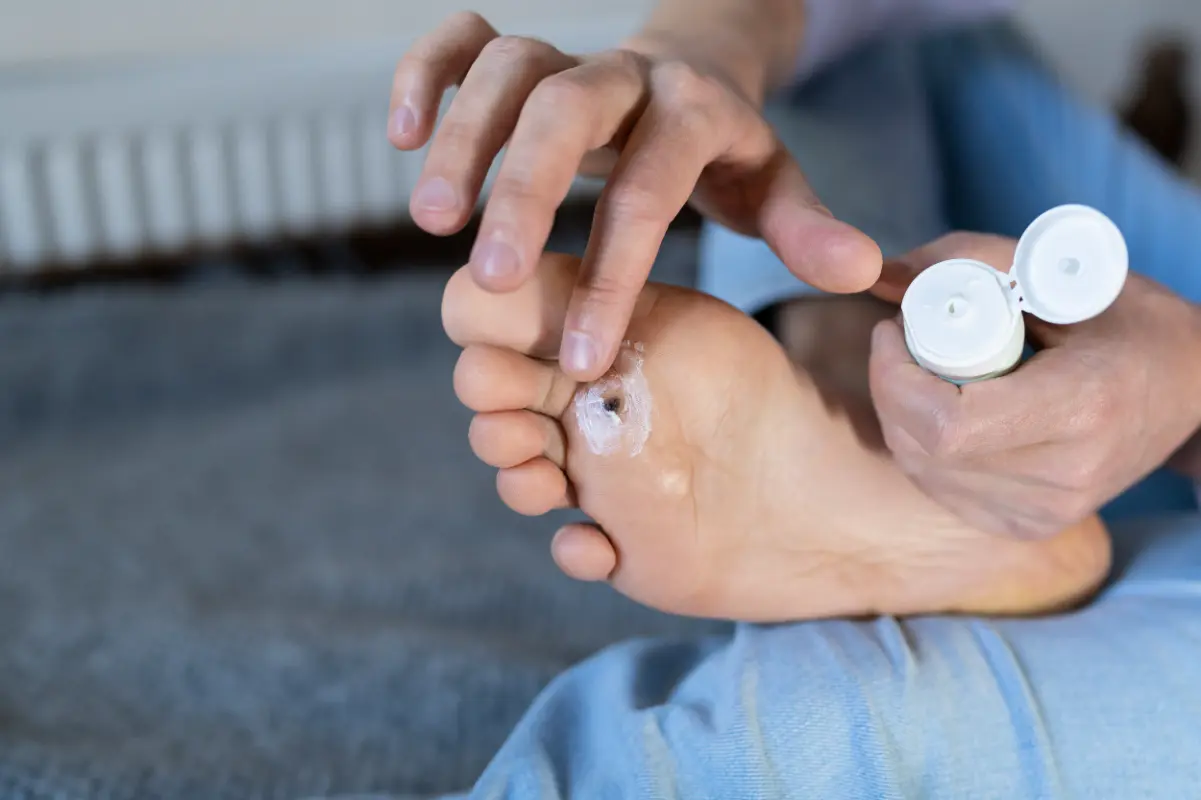
Verrucae, also known as plantar warts, are common viral skin infections that develop on the soles of the feet. They are caused by the human papillomavirus (HPV), which enters the skin through tiny cuts or abrasions.
Although many verrucae are harmless and may disappear on their own, they can become painful, spread to other areas of the foot, or be passed on to other people. Professional podiatry treatment can help relieve discomfort and provide effective management.
What Is a Verruca?
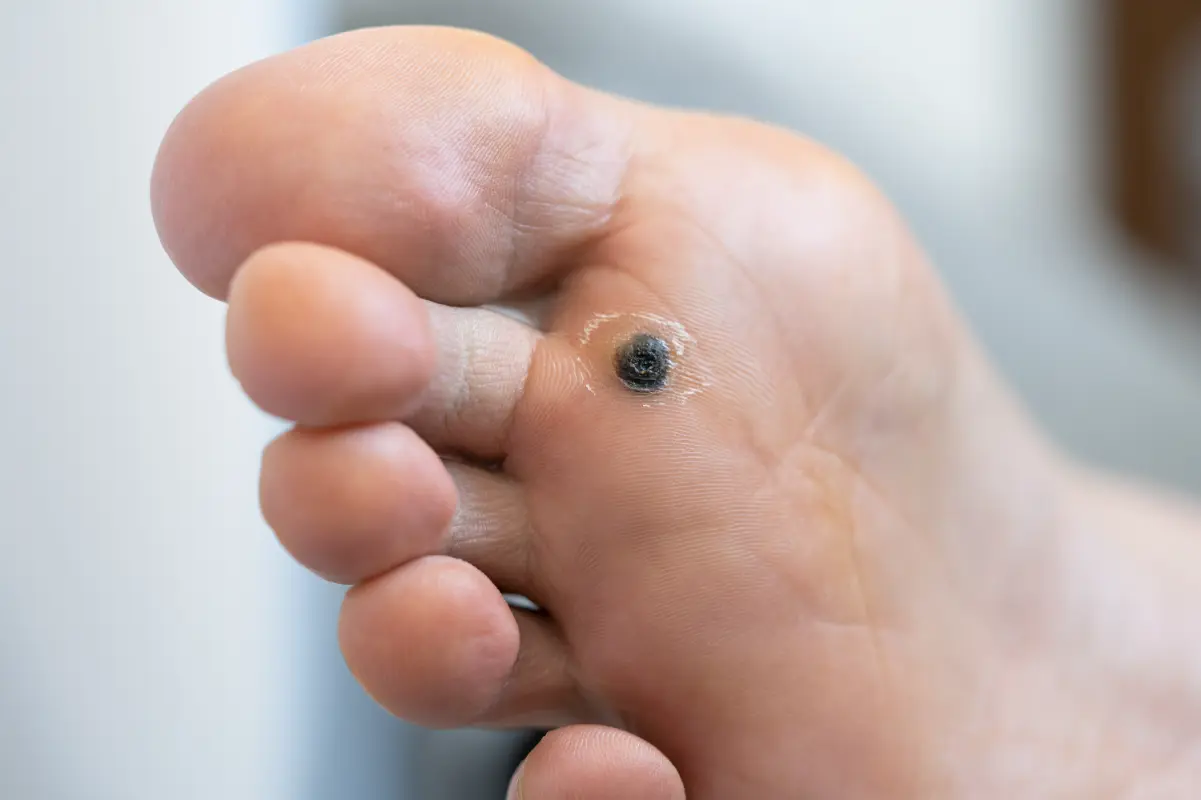
A verruca is a wart that develops on the weight-bearing areas of the foot. Because of the pressure created when standing and walking, verrucae often grow inwards rather than protruding from the skin.
They may appear as:
- A rough, thickened area of skin
- A small circular lesion with a defined edge
- Tiny black dots within the lesion (clotted blood vessels)
- A painful spot when standing or walking
- A lesion that interrupts the normal skin lines
Some people develop a single verruca, while others may have multiple verrucae that cluster together, known as mosaic verrucae.
What Causes Verrucae?
Verrucae are caused by infection with certain strains of the human papillomavirus (HPV). The virus thrives in warm, moist environments and is commonly picked up in places where people walk barefoot.
Common places where infection can occur include:
- Swimming pools
- Communal changing rooms
- Gym showers
- Leisure centres
- Shared bathroom facilities
Not everyone exposed to the virus develops a verruca. Factors such as skin damage and an individual’s immune response influence whether infection occurs.
Symptoms
Verrucae may cause:
- Pain when walking or standing
- Tenderness when pressure is applied from the sides
- Thickened skin over the lesion
- Black pinpoint dots within the wart
- A sensation of walking on a small stone
Some verrucae cause no discomfort and are only noticed during routine foot care.
How Are Verrucae Diagnosed?
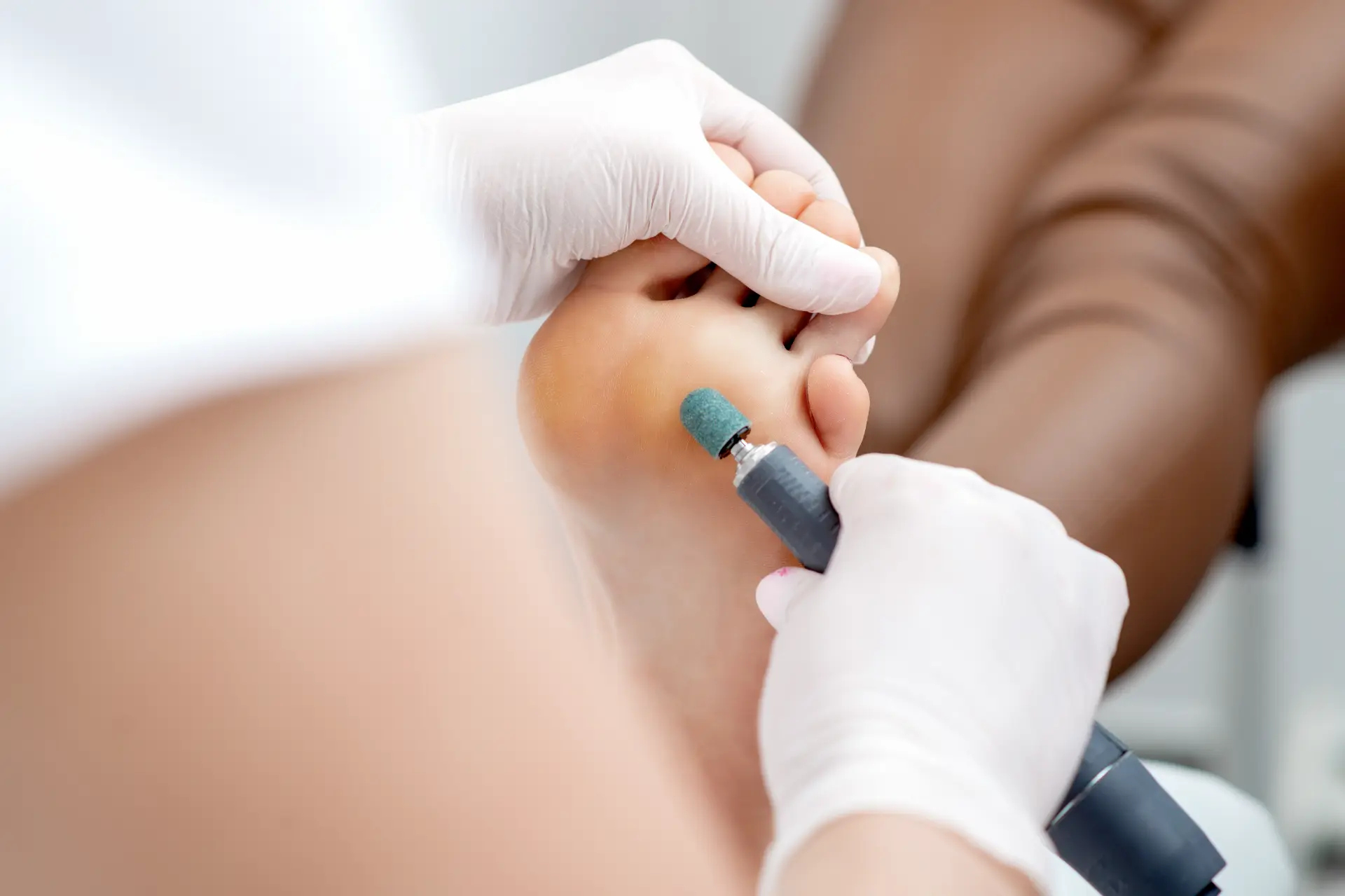
A podiatrist can usually diagnose a verruca by examining the lesion. In some cases, gently reducing the surrounding hard skin helps reveal the characteristic appearance of the wart.
If a lesion appears unusual or there is any uncertainty about the diagnosis, further assessment or referral may be recommended.
Verruca FAQs
Will a verruca go away on its own?
Some verrucae clear by themselves over months or years as the body fights the virus, but many are stubborn, and treatment can speed things up, particularly when they are painful or spreading.
How can I avoid spreading it?
Cover the verruca in communal areas, avoid sharing towels and footwear, and keep your feet dry. We will give you specific advice at your consultation.
How many treatment sessions will I need?
This varies from person to person. We will give you a realistic estimate after examining your verruca.
Book a Verruca Consultation in Worthing
Arrange your appointment online through our booking system or contact the clinic.