
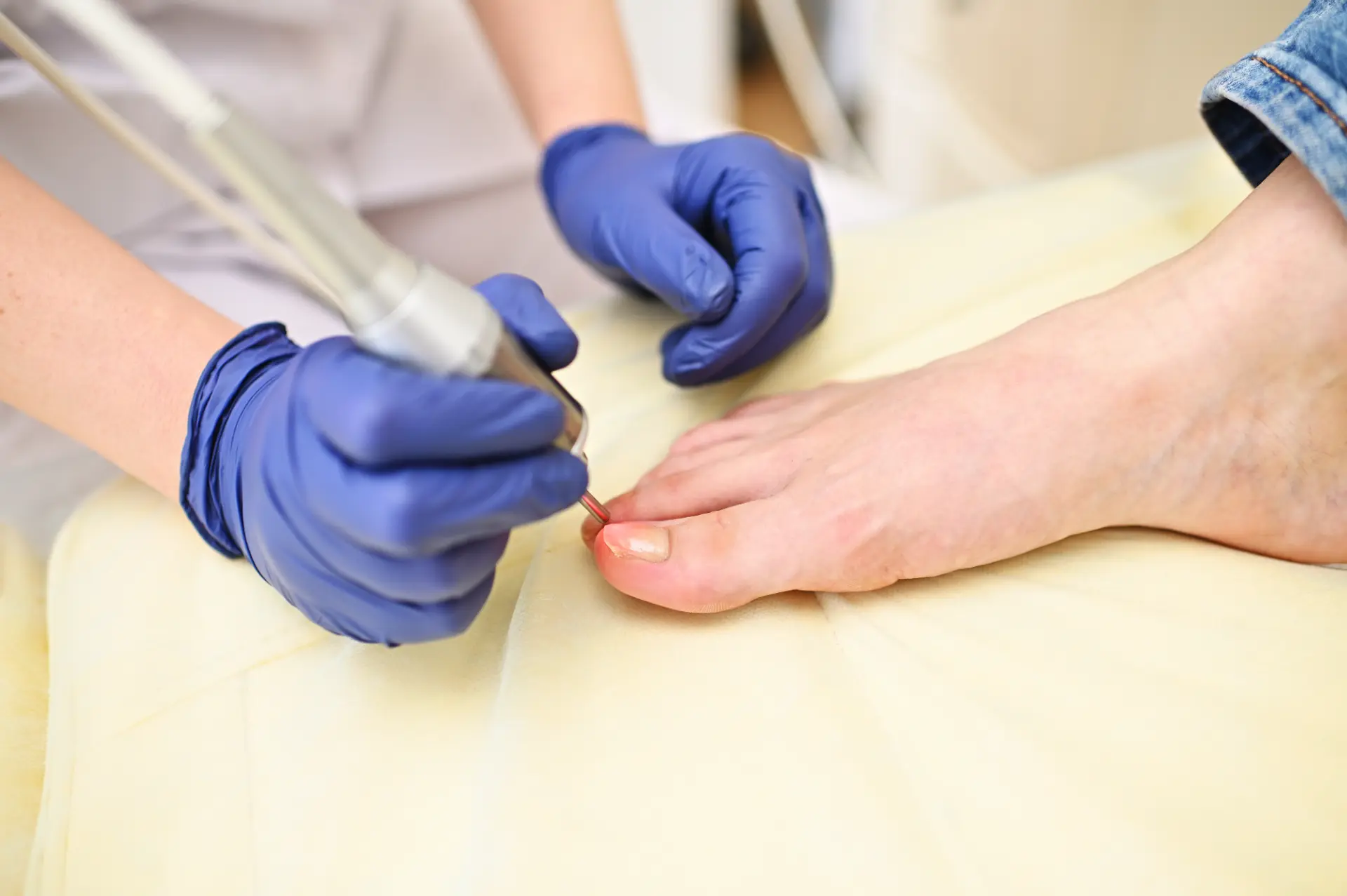

Diabetic Foot Care
If you have diabetes, looking after your feet is an essential part of maintaining your overall health. Diabetes can affect the circulation and nerves in your feet, increasing the risk of injury, infection, and delayed healing. Regular podiatry care can help identify problems early, reduce the risk of complications, and keep your feet healthy.
At Sussex Total Foot Care, we provide professional diabetic foot assessments, routine foot care, and ongoing monitoring tailored to your individual needs.
Why Is Foot Care Important for People with Diabetes?
Over time, diabetes can affect the blood vessels and nerves that supply your feet. This may lead to:
- Reduced sensation (peripheral neuropathy)
- Reduced blood flow (peripheral arterial disease)
- Slower wound healing
- An increased risk of infection
- Changes in the shape of the feet
If sensation is reduced, you may not notice a blister, cut, or injury until it has become more serious. Regular foot examinations can help detect problems before they develop into complications.
Who Should Have Regular Diabetic Foot Checks?
Everyone with diabetes should have their feet checked regularly, even if they have no symptoms.
Regular podiatry appointments are particularly important if you:
- Have reduced sensation in your feet
- Have poor circulation
- Have had a previous foot ulcer
- Have a history of foot infections
- Have foot deformities such as bunions or hammer toes
- Find it difficult to care for your own feet
- Have thickened or difficult-to-manage toenails
Routine assessments allow us to monitor your foot health and identify changes as early as possible.
What Happens During a Diabetic Foot Assessment?
During your appointment, your podiatrist may:
- Assess the circulation in your feet
- Test sensation using specialist equipment
- Examine your skin and nails
- Check for pressure areas, corns, calluses, or deformities
- Assess your footwear
- Discuss your medical history and diabetes management
- Provide personalised advice on foot care and reducing your risk of complications
These assessments help determine your individual level of foot risk and guide recommendations for ongoing care.
Routine Diabetic Foot Care
We offer a range of treatments designed to help maintain healthy feet, including:
- Safe nail cutting and nail care
- Reduction of thickened toenails
- Corn and callus removal
- Management of cracked heels
- Monitoring of skin changes
- Advice on footwear and foot hygiene
- Early identification of developing problems
Regular podiatry appointments can help prevent minor issues from becoming more serious.